
Most people who struggle to save money are not overspending on obvious things. They are losing small amounts across dozens of categories they never planned for in the first place. Zero-based budgeting fixes this by refusing to let a single pound or dollar go unaccounted for.
Unlike more relaxed budgeting methods, zero-based budgeting demands intention. Every unit of income gets assigned a specific purpose before the month even begins, whether that purpose is rent, groceries, savings, or fun money. By the end of the plan, income minus all assigned categories should equal exactly zero. This guide explains exactly how it works and how to build your first one.
What Is Zero-Based Budgeting?
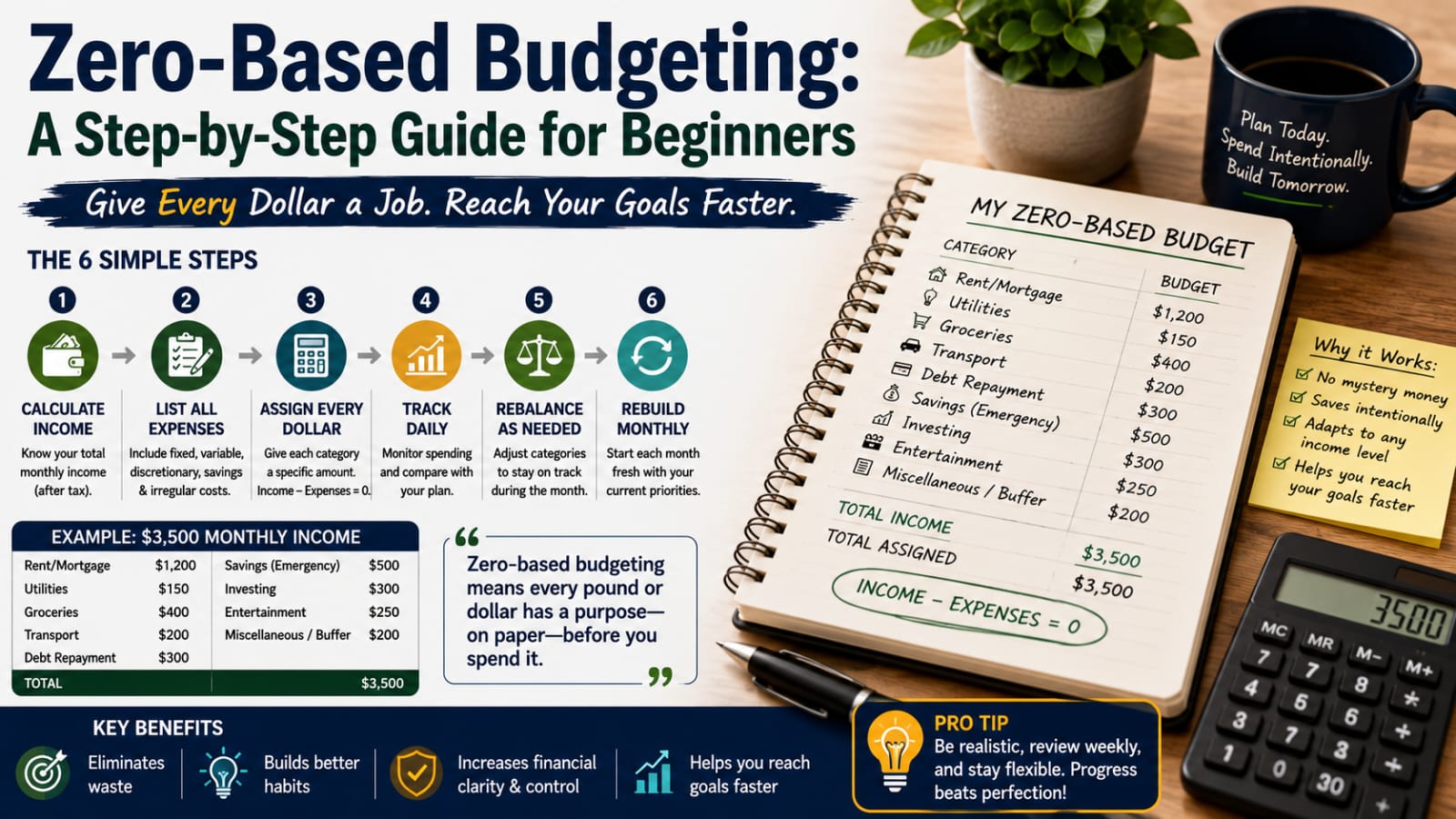
Zero-based budgeting means that your income minus your expenses, savings, and debt payments equals zero at the end of the planning process. This does not mean you spend everything you earn. It means every dollar or pound has been deliberately assigned somewhere, including savings and investment categories, so nothing is left unaccounted for or unconsciously absorbed into random spending.
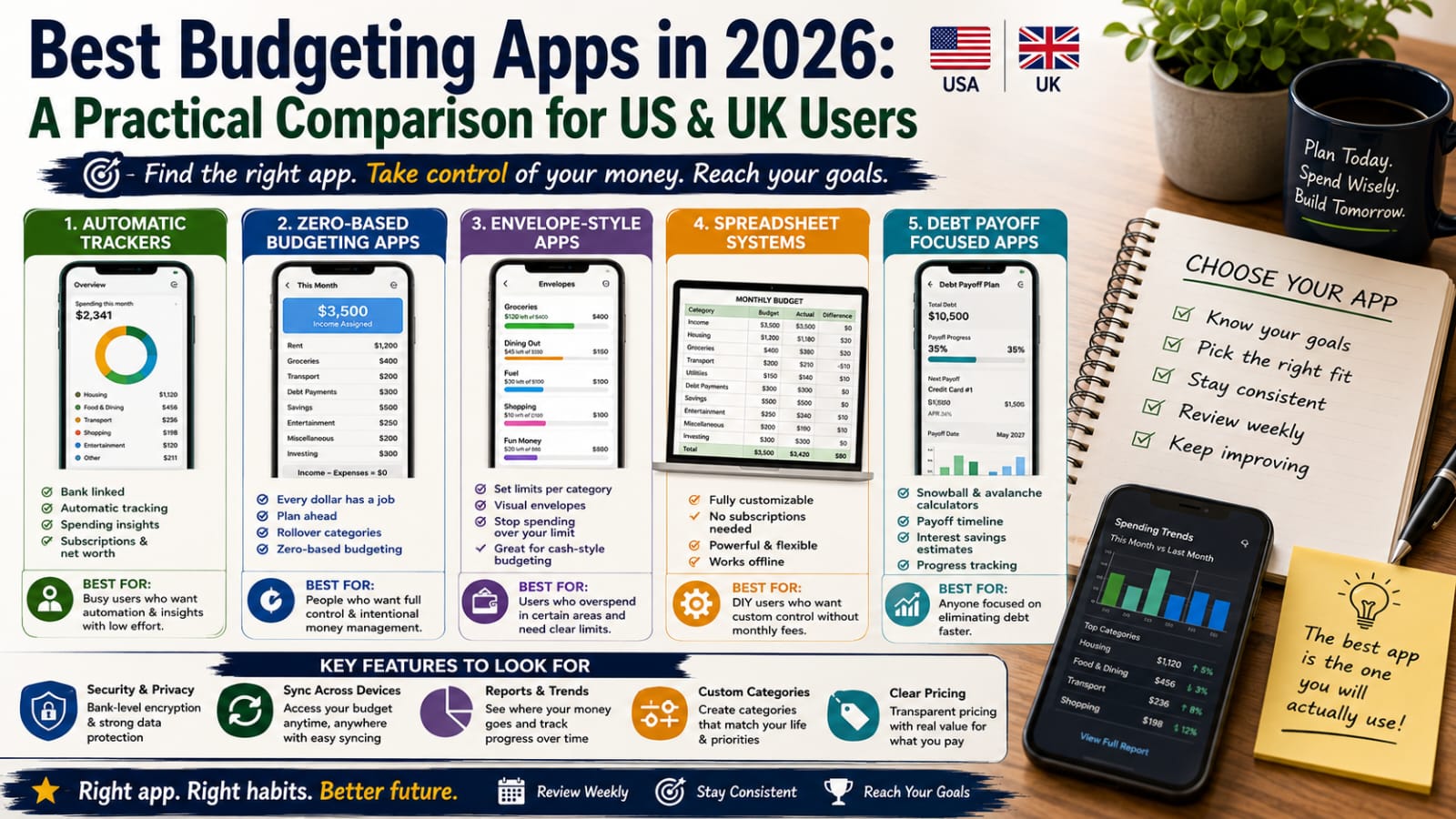
For example, if you earn $3,500 a month, a zero-based budget might look like this:
Rent: $1,200
Utilities: $150
Groceries: $400
Transport: $200
Debt repayment: $300
Savings: $500
Entertainment: $250
Miscellaneous/buffer: $200
Investing: $300
$1,200 + $150 + $400 + $200 + $300 + $500 + $250 + $200 + $300 = $3,500. Every dollar has a job, and the math balances to zero.
Why Zero-Based Budgeting Works So Well
It eliminates “mystery money.” Without a plan, small unplanned purchases quietly consume income that could otherwise go toward savings or goals. Zero-based budgeting forces every category, including discretionary spending, to be decided in advance.
It makes saving intentional, not accidental. Instead of saving “whatever is left over” at the end of the month (which for most people ends up being very little or nothing), savings and investing become planned categories just like rent or groceries.
It adapts naturally to changing income. Because the entire budget is rebuilt each month based on actual income and priorities, it works well for people whose income fluctuates, unlike rigid percentage-based systems.
It increases financial awareness. Building a plan for every dollar each month keeps you closely connected to your financial situation, rather than operating on autopilot.
Step 1: Calculate Your Monthly Income
Start with your total expected income for the month, using net (after-tax) income if you are employed. If your income varies, such as with freelance work or irregular shifts, use your most conservative realistic estimate based on recent months, and treat any income above that as a bonus to allocate once it actually arrives.
Step 2: List Every Expense Category
This is the most detailed step, and thoroughness here is what makes zero-based budgeting effective. Break expenses into clear categories:
Fixed expenses — the same amount every month:
Rent or mortgage
Insurance premiums
Loan or credit payments
Subscriptions
Variable essential expenses — necessary but fluctuating:
Groceries
Utilities
Fuel or transport costs
Household supplies
Discretionary expenses — optional but part of a full life:
Dining out
Entertainment
Hobbies
Shopping
Savings and financial goals — treated as non-negotiable categories, not leftovers:
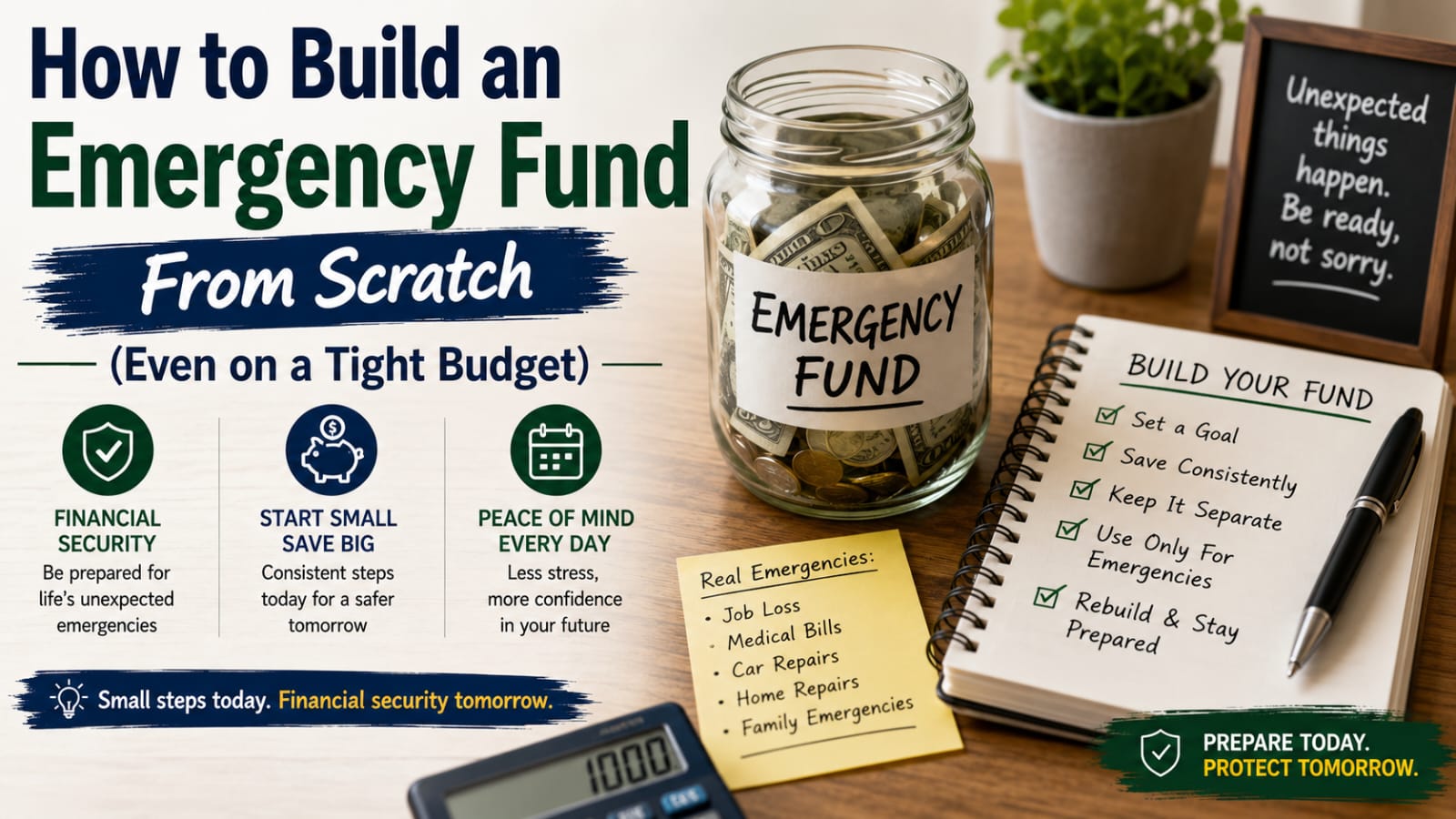
Emergency fund contributions
Retirement or investment contributions
Specific savings goals (holiday, house deposit, car)
Irregular/annual expenses — divided by twelve to create a monthly set-aside amount:
Annual subscriptions
Car maintenance
Gifts and holidays
Insurance renewals
Step 3: Assign an Amount to Every Category
Go through each category and assign a specific number based on either past spending (for essentials) or intentional goals (for savings and discretionary spending). Add every category together and compare the total to your income from Step 1.
If the total is less than your income, you have unassigned money. Do not leave it unassigned; put it toward savings, extra debt payments, or a specific goal until the total matches your income exactly.
If the total is more than your income, something has to give. Look first at discretionary categories, since these are usually the easiest to adjust without major lifestyle disruption.
Step 4: Track Spending Against the Plan Throughout the Month
A zero-based budget is only as useful as the tracking behind it. Throughout the month, log expenses against their assigned category, whether through an app, spreadsheet, or simple notebook. This is what allows you to catch overspending in one category early enough to adjust before it derails the entire plan.
Step 5: Rebalance When Categories Run Over
Life rarely follows a plan exactly, and that is expected, not a failure. If you overspend in one category partway through the month, the zero-based approach requires you to pull money from another category to cover it, keeping the overall plan balanced at zero rather than simply going into overdraft or on a credit card.
For example, if car repairs cost more than expected this month, you might temporarily reduce the entertainment or dining-out category to absorb the difference, rather than letting the whole budget fall apart.
Step 6: Rebuild the Budget Every Month
Unlike a “set it and forget it” system, zero-based budgeting is rebuilt fresh each month based on that month’s actual income and circumstances. This might feel like more work initially, but most people find it takes only fifteen to twenty minutes once the categories are established, since the structure stays largely the same each time with only the numbers changing.
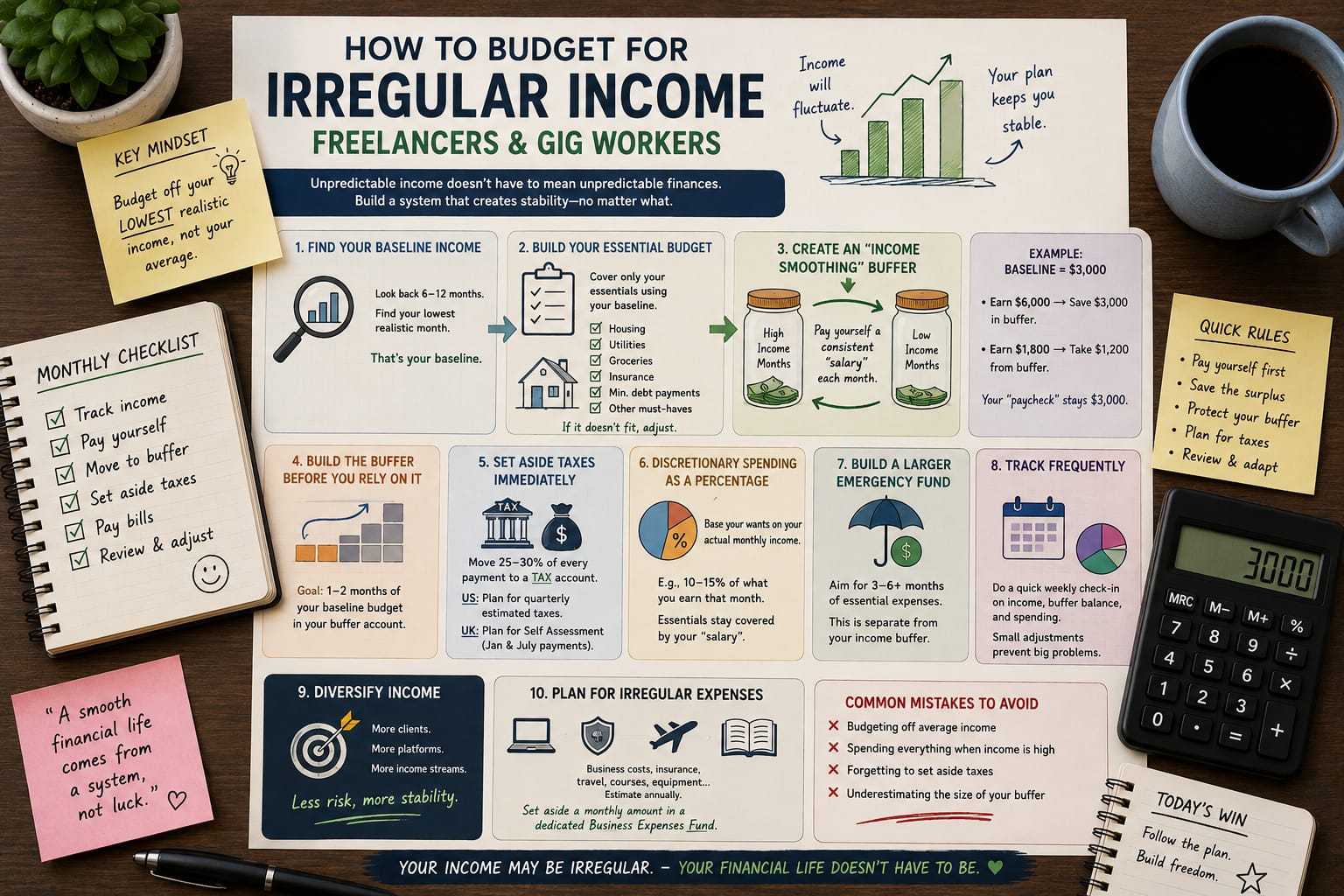
Zero-Based Budgeting for Irregular Income
If your income varies significantly month to month, zero-based budgeting actually becomes more useful, not less. Build your budget based on your lowest expected income for the month, prioritizing essential expenses and a minimum savings contribution first. As additional income arrives throughout the month, assign it immediately to the next priority: extra debt payments, additional savings, or a specific financial goal, rather than letting it drift into unplanned spending.
This “income arrives, income gets assigned” rhythm keeps irregular earners from overspending during high-income months and underprepared during low-income ones.
Common Mistakes When Starting Zero-Based Budgeting
Forgetting irregular expenses. Annual costs like car registration or holiday gifts need their own monthly set-aside category, or they will blow up an otherwise perfect plan when they arrive.
Being unrealistic in essential categories. Setting a grocery budget far below what you actually spend, without an actual plan to reduce it, sets the whole system up to fail from day one.
Not leaving a buffer category. A small “miscellaneous” category, even just 3-5% of income, absorbs minor unplanned expenses without requiring you to raid your savings category every time something small comes up.
Giving up after one difficult month. The first month of any zero-based budget is often the hardest, since old habits and forgotten expenses tend to surface. Give it at least two to three months before judging its effectiveness.
Tools for Zero-Based Budgeting
While zero-based budgeting can be done with pen and paper, most people find a spreadsheet or dedicated app significantly easier to maintain, particularly because it automatically recalculates totals as you adjust categories. Look for tools that allow custom categories and easy monthly resets, since the flexibility to rebuild each month is central to how this method works.
Who Should Use Zero-Based Budgeting
This method works particularly well for:
People who feel like their money “disappears” without explanation each month
Households juggling multiple financial goals at once (debt payoff, savings, investing)
Freelancers and gig workers with variable income
Anyone who has tried looser budgeting methods and found they lacked enough structure
It may feel like overkill for people with very simple, stable finances and few competing priorities, where a broader method like the 50/30/20 rule might be sufficient and less time-intensive.
Final Thoughts
Zero-based budgeting is not about restriction. It is about intention. By assigning every single dollar or pound a specific job before the month begins, including savings and discretionary spending, you eliminate the mystery of where your money goes and replace it with a clear, deliberate plan. It takes more upfront effort than looser budgeting methods, but for many people, that extra structure is exactly what turns budgeting from a vague intention into a genuinely effective financial habit.
Frequently Asked Questions
Does zero-based budgeting mean spending all my income? No. It means every dollar is assigned a purpose, including savings, investing, and debt repayment categories, so nothing is left unaccounted for, even though a meaningful portion is intentionally directed toward building wealth rather than spending.
How is zero-based budgeting different from the 50/30/20 rule? The 50/30/20 rule uses three broad percentage-based categories, while zero-based budgeting requires detailed, specific categories for every type of expense, offering more precision at the cost of more time.
Is zero-based budgeting good for irregular income? Yes, it works particularly well for irregular income because the budget is rebuilt fresh each month based on actual income received, with a clear priority order for allocating any extra earnings.
How long does it take to build a zero-based budget each month? After the first one or two months of setting up categories, most people can rebuild their zero-based budget in fifteen to twenty minutes each month.
Zero-Based Budgeting: A Step-by-Step Guide for Beginners


Leave a Reply