

Wealth-building is often portrayed as something requiring a high income, insider investment knowledge, or a dramatic financial windfall. In reality, most genuine wealth is built slowly, through consistent, unremarkable habits sustained over many years, not through any single dramatic decision or unusually high income.
This guide focuses specifically on the small, repeatable habits that genuinely compound into meaningful wealth over time, regardless of whether you are earning an average income or something more modest, and why consistency matters far more than the size of any single financial decision.
Understanding Why Small Habits Compound So Powerfully
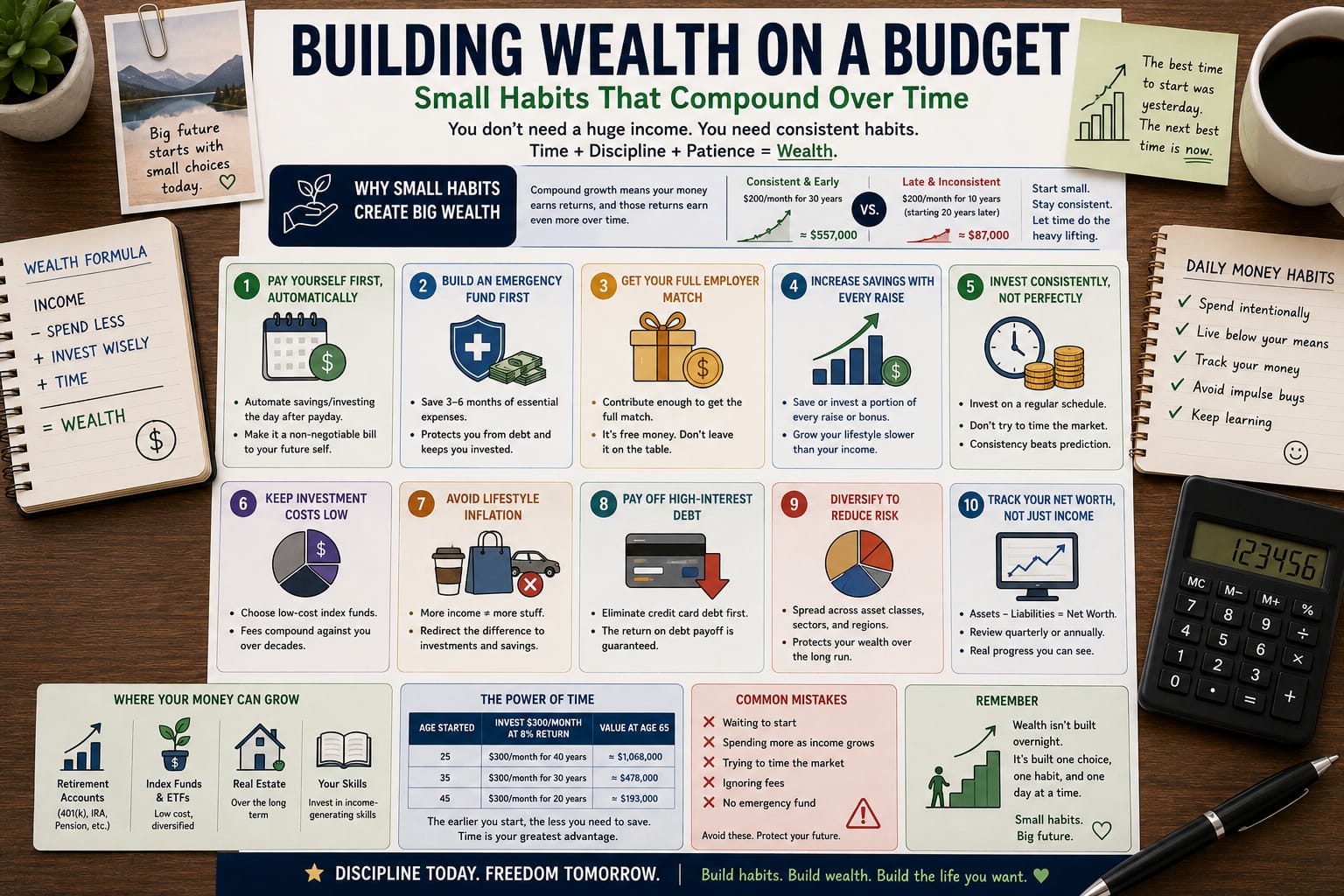
The core mathematical principle behind long-term wealth building is compound growth, where returns generate their own returns over time, creating accelerating growth the longer money remains invested. This means that starting early and staying consistent, even with modest amounts, often outperforms larger but inconsistent or late-starting efforts.
A relatively modest amount invested consistently over several decades can grow into a substantial sum, purely through the power of compounding, without requiring exceptional investment returns or a particularly high income along the way. This is why the habits described below focus on consistency over intensity.
Habit 1: Pay Yourself First, Automatically
Rather than saving whatever happens to be left over at the end of the month, which for most people ends up being very little, treat savings and investing as a non-negotiable “bill” paid to yourself immediately when income arrives.
Set up an automatic transfer, timed for the day after payday, moving a set amount or percentage directly into a savings or investment account before it has a chance to be spent elsewhere. Even a modest starting amount, increased gradually over time as income grows, builds a powerful habit that requires no ongoing willpower once established.
Habit 2: Build an Emergency Fund Before Investing Aggressively
While it might seem tempting to direct all extra money toward investing to maximize long-term growth, a genuine emergency fund of three to six months of essential expenses should typically come first. Without this buffer, an unexpected expense often forces you to sell investments at an inopportune time, or worse, rely on high-interest debt, undoing progress that took considerable time and discipline to build.
This fund provides the stability that allows you to remain invested consistently through market fluctuations, rather than being forced into poorly timed withdrawals during a genuine emergency.
Habit 3: Take Full Advantage of Employer Retirement Matching
If your employer offers any form of matching retirement contribution, whether a 401(k) match in the US or a workplace pension contribution in the UK, contributing at least enough to receive the full match is one of the most immediately effective wealth-building actions available. This is effectively an immediate, guaranteed return on your contribution, something rarely available anywhere else in personal finance.
Failing to claim a full employer match is often described as leaving free money on the table, and prioritizing this contribution, even before other savings goals, generally makes strong financial sense given the immediate, guaranteed nature of the benefit.
Habit 4: Increase Savings Rate With Every Raise or Windfall
A particularly powerful and painless habit is committing to save or invest a meaningful portion of any future raise, bonus, or unexpected windfall, rather than allowing lifestyle spending to expand to match the full increase in income.
For example, committing to save half of every future raise while allowing the other half to support modest lifestyle improvements strikes a sustainable balance, allowing genuine enjoyment of increased income while still meaningfully accelerating long-term wealth building over time.
Habit 5: Invest Consistently Regardless of Market Conditions
One of the most common wealth-building mistakes is attempting to time the market, waiting for the “right moment” to invest based on predictions about future market movements. In reality, consistent investing on a regular schedule, regardless of whether the market is currently up or down, tends to outperform attempts at timing for most individual investors over the long run.
This approach, often called dollar-cost averaging, involves investing a fixed amount at regular intervals, which naturally buys more shares when prices are lower and fewer when prices are higher, smoothing out the impact of market volatility over time without requiring any predictive skill.
Habit 6: Keep Investment Costs Low
Fees might seem small on a percentage basis, but they compound negatively over long time horizons in the same way returns compound positively. A seemingly modest difference in annual fees, when compounded over several decades, can result in a substantial difference in final investment value.
Low-cost, broadly diversified index funds are a common, straightforward choice for long-term wealth building precisely because they typically carry significantly lower fees than actively managed alternatives, while historically matching or exceeding the performance of many actively managed funds over long periods.
Habit 7: Avoid Lifestyle Inflation as Income Grows
As income increases over a career, spending very often increases right alongside it, a pattern known as lifestyle inflation, which can prevent meaningful wealth accumulation even for people earning a considerably above-average income.
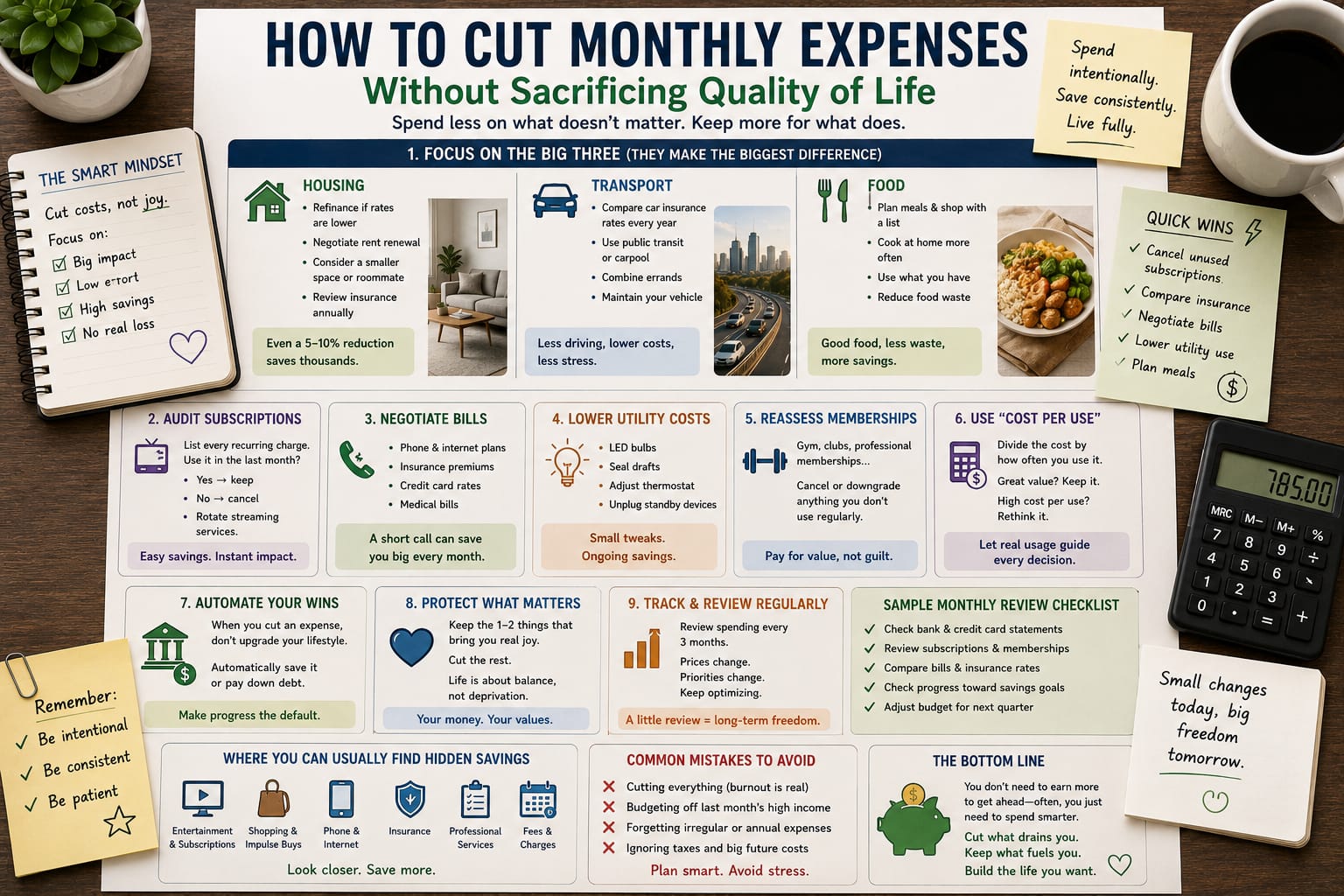
Deliberately maintaining a modest, sustainable lifestyle relative to your actual income, redirecting the gap toward savings and investing rather than continuous lifestyle upgrades, is one of the most powerful and underrated wealth-building habits available, particularly for people whose income grows meaningfully over their careers.
Habit 8: Pay Off High-Interest Debt Aggressively
High-interest debt, particularly credit card debt with rates often in the 20-30% range, works directly against wealth-building efforts, since the interest cost typically exceeds what could realistically be earned through investing. Prioritizing aggressive repayment of high-interest debt before focusing heavily on additional investing generally makes strong mathematical sense, given the guaranteed “return” of eliminating that interest cost.
Habit 9: Diversify Rather Than Concentrating Risk
Building genuine, sustainable wealth typically benefits from diversification, spreading investments across different asset types, sectors, and geographic regions, rather than concentrating heavily in a single stock or investment type, however promising it might seem. Diversification helps smooth out volatility and reduces the risk of a single poor investment significantly derailing years of consistent progress.
Habit 10: Track Net Worth Rather Than Just Income
Income measures how much money flows through your life, but net worth, your total assets minus your total liabilities, measures actual wealth accumulation over time. Tracking net worth periodically, perhaps quarterly or annually, provides a genuinely meaningful measure of financial progress, since it accounts for savings, investment growth, and debt reduction together in a single number.
Watching net worth grow steadily over time, even through months where income or investment returns fluctuate, provides motivating, tangible evidence that consistent habits are genuinely working.
Why Consistency Beats Intensity
A common misconception is that wealth-building requires large, dramatic financial moves: a lucky investment, a significant windfall, or an unusually high income. In reality, the vast majority of genuine long-term wealth is built through unremarkable, consistent habits sustained over many years: automatic saving, regular investing, avoiding high-interest debt, and resisting lifestyle inflation as income grows.
This is genuinely encouraging news for anyone building wealth on a modest or average income, since it means the habits described here are available to almost anyone, regardless of current income level, rather than requiring exceptional circumstances or unusually high earnings.
Realistic Expectations for Building Wealth on a Budget
Wealth building through consistent habits is a genuinely long-term process, often unfolding over one or more decades rather than producing dramatic results within the first year or two. Early progress often feels slow and unremarkable, since the power of compounding becomes most visible over longer time horizons, accelerating meaningfully in later years compared to the early stages.
Maintaining patience and consistency through this slower early period, without becoming discouraged by seemingly modest initial progress, is often the single biggest factor separating those who build substantial long-term wealth from those who abandon the habits before compounding has had sufficient time to work meaningfully in their favor.
Final Thoughts
Building wealth on a budget does not require a high income, exceptional investment knowledge, or a single dramatic financial decision. It requires consistent, sustainable habits: automating savings, taking full advantage of any employer retirement matching, investing consistently regardless of short-term market conditions, keeping investment costs low, and resisting the natural pull of lifestyle inflation as income grows over time.
These habits, sustained patiently over many years, compound into genuinely substantial wealth for people at virtually any income level. The path is rarely fast or dramatic, but it is remarkably reliable for those willing to stay consistent through the slower early years.
Frequently Asked Questions
How much do I need to invest to build meaningful wealth over time? Even modest, consistent amounts invested regularly over several decades can grow substantially through compounding. Starting early and remaining consistent matters more than the specific starting amount.
Should I pay off debt or invest first? Generally, high-interest debt, such as credit cards, should be prioritized before aggressive investing, since the interest cost typically exceeds realistic investment returns. Lower-interest debt, like some mortgages, may reasonably be balanced alongside continued investing.
What is the easiest way to start building wealth on a modest income? Automating a small, consistent savings or investment contribution immediately after each payday, and gradually increasing it as income grows, is one of the most accessible and effective starting habits available.
How long does it typically take to see meaningful results from these habits? Wealth building through compounding tends to show modest early progress, becoming considerably more visible after a decade or more of consistent contributions, which is why patience and consistency matter more than any single dramatic financial move.
Building Wealth on a Budget: Small Habits That Compound Over Time

Leave a Reply