
Carrying debt is exhausting in ways that go beyond the numbers. It affects sleep, stress levels, and the constant background hum of financial anxiety. The good news is that with a clear strategy, most debt can be paid off faster than people expect, often years earlier than making only minimum payments.
Two methods dominate the conversation around debt payoff: the debt snowball and the debt avalanche. Both work. Both have loyal advocates. But they work in genuinely different ways, and choosing the right one for your personality and situation can make the difference between a plan you stick with and one you abandon after two months.
Understanding the Real Cost of Minimum Payments
Before comparing strategies, it is worth understanding why minimum payments alone are such a slow, expensive path out of debt. Minimum payments are typically calculated to just barely cover interest plus a small amount of principal, meaning a large portion of every payment goes toward interest rather than actually reducing what you owe.
On a credit card with a 22% APR and a $5,000 balance, making only minimum payments could take well over a decade to clear and cost thousands of dollars in interest alone. This is exactly why an intentional, accelerated payoff strategy matters so much.
The Debt Snowball Method
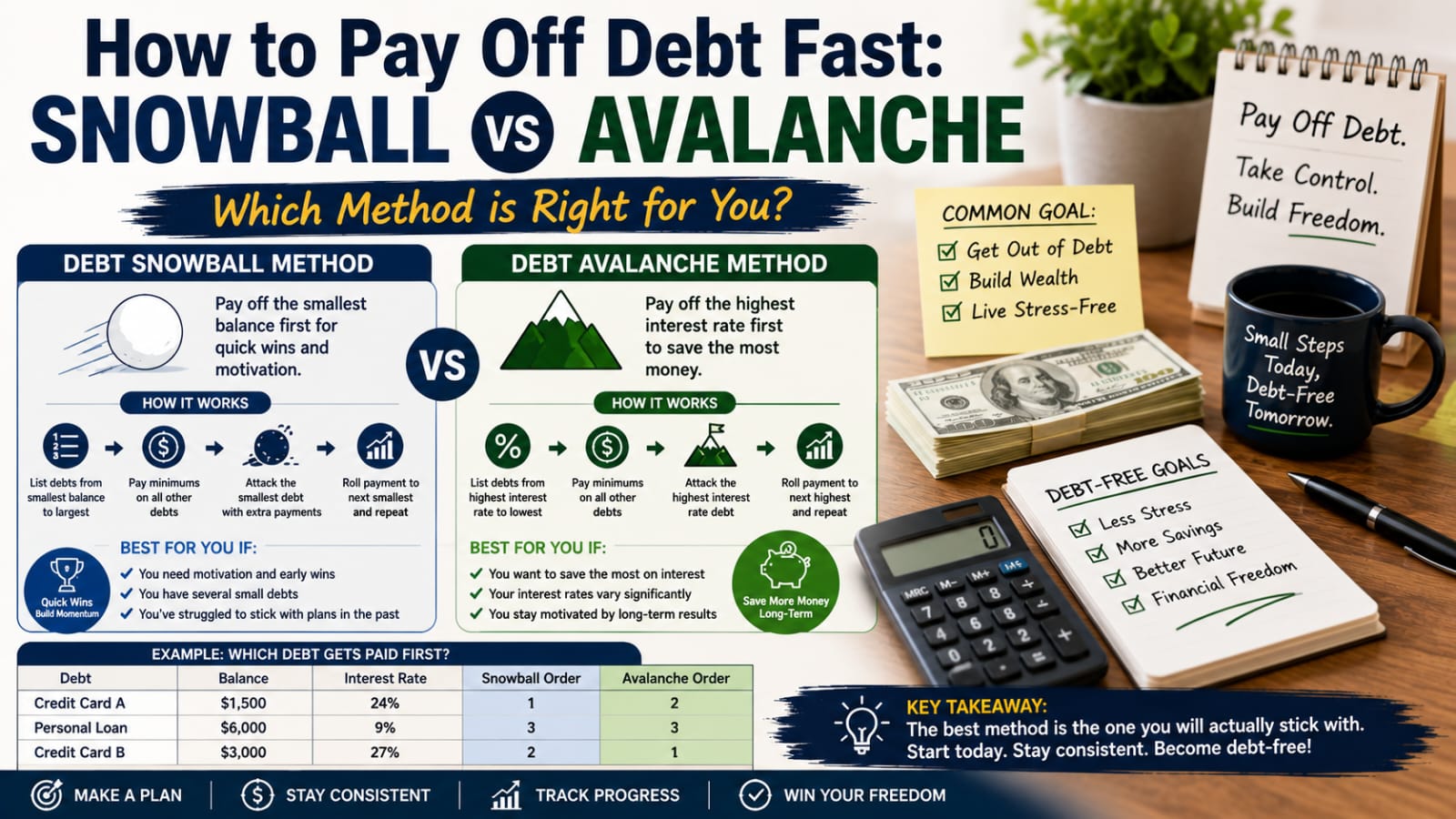
The snowball method focuses on psychology and momentum. Here is how it works:
List all your debts from smallest balance to largest, ignoring interest rates entirely.
Make minimum payments on everything except the smallest debt.
Throw every extra dollar or pound you can find at that smallest debt until it is completely paid off.
Once it is gone, take the entire payment you were making on it (minimum plus extra) and add it to the minimum payment on the next-smallest debt.
Repeat this process, with your payment “snowballing” larger and larger as each debt disappears, until everything is paid off.
Why people love this method: Paying off an entire debt, even a small one, creates a genuine sense of accomplishment and momentum. Popularized by financial personality Dave Ramsey, this method is built entirely around behavioral psychology rather than mathematical optimization. For many people, that early win is the difference between staying motivated for years and giving up after a few discouraging months.
The trade-off: Because it ignores interest rates, the snowball method can cost more in total interest over the life of your payoff plan compared to the avalanche method, especially if your smallest debts happen to carry low interest rates while a larger balance carries a much higher one.
The Debt Avalanche Method
The avalanche method focuses purely on mathematical efficiency. Here is how it works:
List all your debts from highest interest rate to lowest, regardless of balance size.
Make minimum payments on everything except the debt with the highest interest rate.
Direct every extra dollar or pound toward that highest-interest debt until it is paid off.
Once it is gone, roll that entire payment amount into the debt with the next-highest interest rate.
Continue until every debt is cleared.
Why this method is mathematically superior: By targeting the highest interest rate first, you minimize the total amount of interest paid over the life of your debt payoff journey. For people with a large gap between interest rates, such as a 24% credit card alongside a 6% personal loan, this method can save a significant amount of money compared to the snowball approach.
The trade-off: If your highest-interest debt also happens to be your largest balance, it can take a long time to see your first debt fully eliminated, which can feel discouraging and reduce motivation for some people over a long payoff journey.
Snowball vs Avalanche: A Side-by-Side Example
Imagine someone has three debts:
Credit Card A: $1,500 balance, 24% APR
Personal Loan: $6,000 balance, 9% APR
Credit Card B: $3,000 balance, 27% APR
Under the snowball method, they would pay off Credit Card A first (smallest balance), then Credit Card B, then the Personal Loan last, regardless of interest rates.
Under the avalanche method, they would pay off Credit Card B first (highest interest rate at 27%), then Credit Card A (24%), then the Personal Loan last (9%).
In this particular example, the avalanche method would likely save some money in total interest, since it tackles the highest-rate debt first. However, the snowball method delivers an earlier full payoff (Credit Card A at $1,500) which may provide the motivational boost needed to stay consistent with the rest of the plan.
Which Method Should You Choose?
Choose the debt avalanche if:
You are motivated primarily by numbers and minimizing total cost
Your debts have significantly different interest rates
You have a track record of sticking with long-term financial plans without needing frequent “wins” for motivation
Choose the debt snowball if:
You have struggled to stick with financial plans in the past
You have several smaller debts you could clear relatively quickly
The psychological boost of an early win matters more to you than optimizing every dollar of interest
Consider a hybrid approach if:
You want some quick wins early on but still want to prioritize genuinely high-interest debt
You might, for example, pay off one or two very small debts first for momentum, then switch to strict avalanche ordering for the remainder
There is no wrong answer here. The best method, mathematically speaking, is the one you will actually follow through to completion. A perfectly optimized plan abandoned after three months achieves far less than a slightly less efficient plan followed for two full years.
Finding Extra Money to Accelerate Either Method
Both strategies rely on finding extra money beyond minimum payments to direct toward your target debt. Common sources include:
Reviewing and cutting discretionary spending temporarily, such as dining out or subscriptions, redirecting that money specifically toward debt.
Using windfalls intentionally, including tax refunds, bonuses, or cashback rewards, rather than letting them absorb into general spending.
Picking up temporary extra income, whether through overtime, freelance work, or selling unused items.
Negotiating lower interest rates directly with creditors, particularly for credit cards, which can sometimes reduce your rate simply by asking, especially if you have a solid payment history.
Considering a balance transfer or consolidation loan for high-interest credit card debt, which can significantly reduce interest costs if used carefully and paired with a firm payoff plan, not as an excuse to accumulate new debt.
Avoiding Common Debt Payoff Mistakes
Continuing to add new debt while paying off old debt. This is the single most common reason payoff plans fail. Both the snowball and avalanche methods assume no new debt is being added during the process.
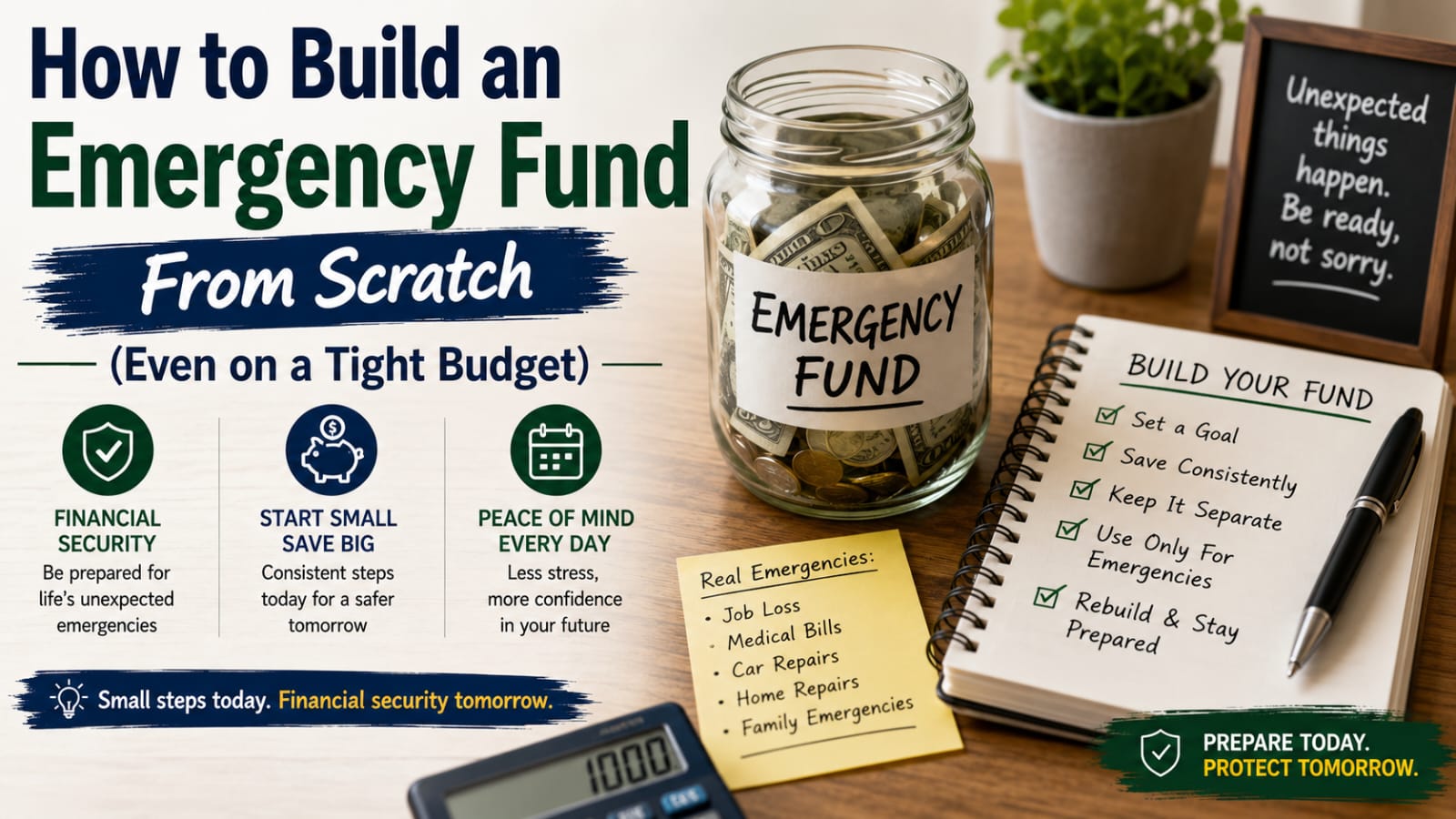
Not building any emergency buffer at all. Without at least a small cash cushion, an unexpected expense can end up right back on a credit card, undoing progress. Many people build a small starter emergency fund of $500-$1,000 before going into aggressive debt payoff mode.
Underestimating how long the full payoff will take. Debt payoff is often a multi-year process for significant balances. Setting realistic expectations from the start helps prevent discouragement partway through.
Ignoring the psychological side entirely. Personal finance is deeply personal. A strategy that ignores your own motivation patterns, even if mathematically optimal, is less likely to succeed than one that accounts for how you actually respond to progress and setbacks.
Tracking Your Progress
Regardless of which method you choose, visible tracking makes a significant difference in staying motivated. A simple debt payoff chart, spreadsheet, or app that shows your total debt decreasing over time provides tangible proof of progress, especially during months when it might not feel like much is changing.
Some people find it helpful to celebrate small milestones along the way, such as paying off 25%, 50%, and 75% of total debt, rather than waiting until the entire amount is cleared to acknowledge progress.
Final Thoughts
Both the debt snowball and debt avalanche methods can genuinely accelerate your path out of debt compared to minimum payments alone. The avalanche method saves more money mathematically by targeting high-interest debt first, while the snowball method builds motivation through early, tangible wins by targeting the smallest balances first.
The right choice depends less on which method is theoretically superior and more on which one you can realistically follow through to completion. Whichever method you choose, the most important factor is simply starting, staying consistent, and directing every extra dollar or pound you can find toward becoming debt-free.
Frequently Asked Questions
Which method pays off debt faster: snowball or avalanche? The avalanche method typically results in less total interest paid and can technically finish slightly faster overall, but the snowball method often provides earlier individual debt payoffs, which some people find more motivating to sustain long-term.
Can I switch methods partway through my debt payoff journey? Yes. Some people start with the snowball method for early motivation and switch to the avalanche method once they have built momentum and confidence in sticking with the plan.
Should I stop saving entirely while paying off debt? Most guidance suggests keeping a small emergency fund of $500-$1,000 even during aggressive debt payoff, to avoid creating new debt when unexpected expenses arise.
Does debt consolidation help with either method? It can, particularly for high-interest credit card debt, by potentially lowering your overall interest rate. However, it should be paired with a firm payoff plan and a commitment not to accumulate new debt on cleared credit lines.
How to Pay Off Debt Fast: Snowball vs Avalanche Method Compared

Leave a Reply