
If the word “budget” makes you picture endless spreadsheets and complicated formulas, the 50/30/20 rule might be the most refreshing thing you read this year. It is simple enough to explain in one sentence, flexible enough to fit almost any income, and structured enough to actually keep your finances on track.
This guide breaks down exactly what the 50/30/20 rule is, how to apply it to your own income, and where it works brilliantly — as well as where it falls a little short.
What Is the 50/30/20 Rule?
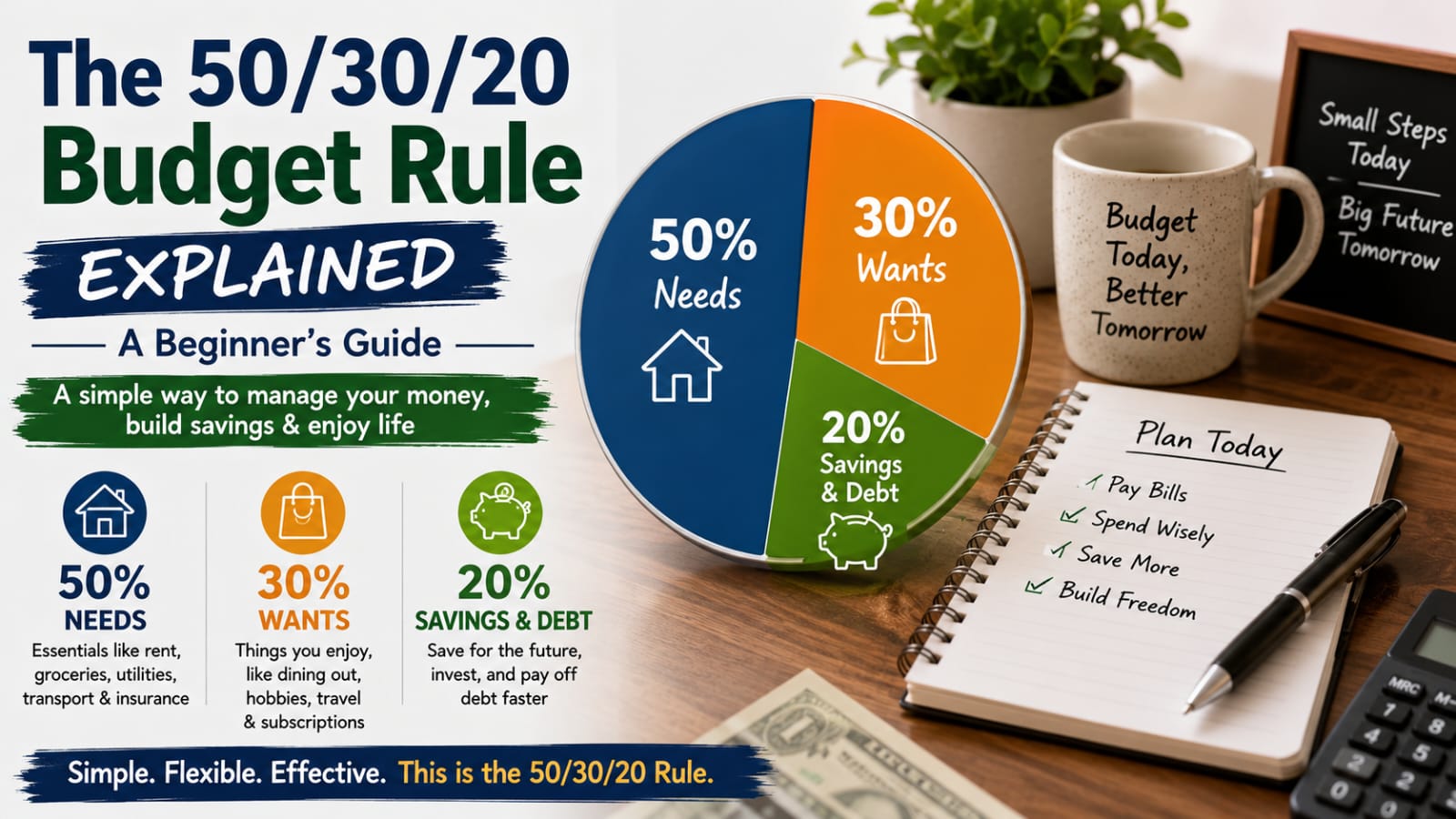
The 50/30/20 rule divides your after-tax income into three simple buckets:
50% for needs — the essentials you cannot avoid, like rent or mortgage, utilities, groceries, insurance, and minimum debt payments.
30% for wants — the things that make life enjoyable but are not strictly necessary, like dining out, streaming subscriptions, hobbies, and travel.
20% for savings and debt repayment — building an emergency fund, investing, or paying down debt faster than the minimum required.
The idea was popularized by US Senator Elizabeth Warren and her daughter Amelia Warren Tyagi in their book about family finances, and it has since become one of the most widely used budgeting frameworks in both the US and UK because of how easy it is to remember and apply.
Why This Method Works So Well for Beginners
Most budgeting failures come from complexity. When someone has to track thirty different categories down to the last pound or dollar, they eventually stop tracking altogether. The 50/30/20 rule solves this by keeping things broad enough to actually maintain.
It also builds in permission to enjoy your money. Unlike overly strict budgets that eliminate all discretionary spending, this method explicitly sets aside 30% for things you want, not just things you need. That built-in flexibility is a major reason people stick with it longer than more rigid systems.
Breaking Down the “Needs” Category (50%)
Needs are the expenses you would still have to pay even if your income dropped significantly. This typically includes:
Rent or mortgage payments
Utility bills (electricity, gas, water, internet)
Groceries (not takeaway or dining out)
Transport needed for work (fuel, public transport, car payments)
Insurance (health, car, home/renters)
Minimum debt payments
A common mistake here is misclassifying wants as needs. A premium gym membership or the most expensive phone plan available are lifestyle choices, not core needs, even if they feel essential day to day. Be honest when sorting expenses into this category, because inflating it defeats the purpose of the whole framework.
Breaking Down the “Wants” Category (30%)
Wants are the expenses that improve your quality of life but are not required for basic functioning. This includes:
Dining out and takeaway food
Streaming services and subscriptions
Hobbies and entertainment
Shopping for non-essential items
Holidays and travel
Upgraded versions of things you already need (a nicer car than strictly necessary, a bigger home than required)
This category is where lifestyle creep often hides. As income grows, wants tend to expand quietly until they swallow up money that could otherwise go toward savings. Keeping this category at 30% forces a regular check-in on whether spending is aligned with actual priorities.
Breaking Down the “Savings and Debt” Category (20%)
This is the wealth-building portion of the framework, and it typically covers:
Building or topping up an emergency fund
Retirement contributions beyond any employer match already counted elsewhere
Investing in a brokerage account, ISA, or similar vehicle
Extra payments on debt beyond the required minimum
If you are currently carrying high-interest debt, such as credit card balances, it often makes sense to direct most or all of this 20% toward extra repayments before building up substantial additional savings, since the interest saved usually outweighs what you would earn from a typical savings account.
A Real Example: Applying the Rule to a $4,000 Monthly Income
Let’s say someone brings home $4,000 per month after tax.
Needs (50%) = $2,000 — this might cover $1,200 in rent, $150 in utilities, $400 in groceries, $150 in transport, and $100 in insurance.
Wants (30%) = $1,200 — split across dining out, a couple of subscriptions, a monthly outing budget, and some shopping money.
Savings/debt (20%) = $800 — perhaps $300 into an emergency fund, $300 into a retirement account, and $200 toward extra credit card payments.
The same logic applies at any income level, whether that is £2,000 or $10,000 a month. The percentages stay the same; only the actual amounts scale up or down.
What to Do When Your Needs Exceed 50%
In many high cost-of-living cities across the US and UK, rent alone can eat up close to 50% of take-home income, making the classic split difficult to hit exactly. If this is your situation, you have a few realistic options:
Adjust the ratios temporarily. A 60/20/20 or 65/15/20 split might be more realistic while housing costs are high, with a plan to shift back toward 50/30/20 as income grows or expenses change.
Look for ways to reduce fixed costs. This might mean a roommate, a different neighborhood, refinancing debt, or renegotiating a phone or insurance contract.
Protect the savings percentage above all else. Even if wants and needs blend together in a tight budget, try to preserve at least 10-15% for savings and debt, since this builds long-term financial security regardless of how the rest is split.
The 50/30/20 rule is a guideline, not a rigid law. The goal is intentional spending across three clear categories, not hitting exact percentages every single month.
Where the 50/30/20 Rule Falls Short
No single system works perfectly for everyone, and this one has a few limitations worth knowing:
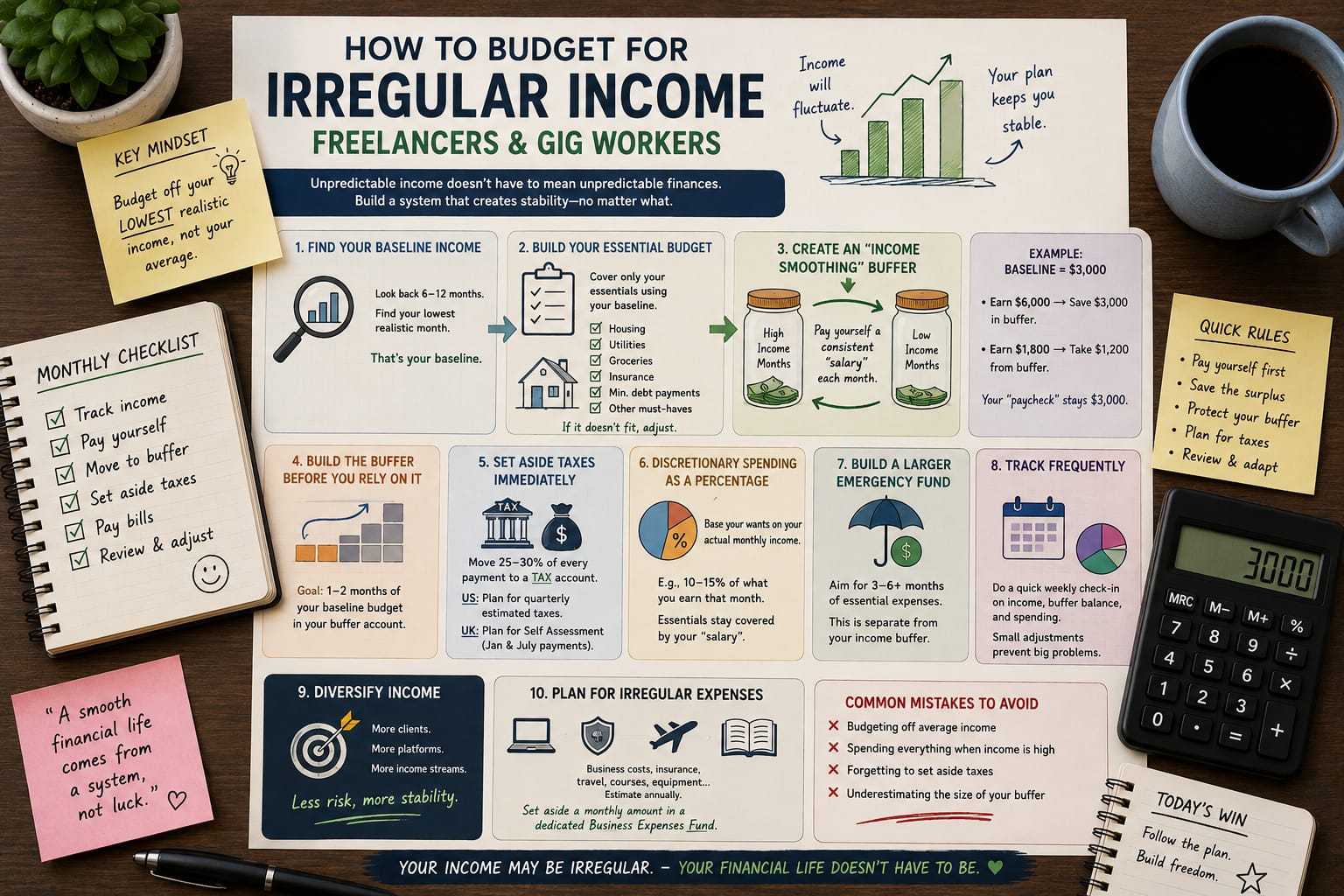
It does not account for irregular income. Freelancers, commission-based workers, and gig economy earners often have income that varies significantly month to month, making fixed percentages harder to apply consistently.
It can be too loose for people who need more structure. If you have struggled with overspending in specific categories, broad buckets like “wants” might not give you enough guardrails. A more detailed category-based system might serve you better.
It does not directly address debt payoff speed. For someone with significant high-interest debt, simply putting 20% toward “savings and debt” might not be aggressive enough. A debt-focused method like the avalanche or snowball approach might need to take priority temporarily.
Combining 50/30/20 With Other Strategies
Many people successfully blend the 50/30/20 framework with other tools rather than using it in isolation. For example, you might use the 50/30/20 split to set broad monthly targets, then use a more detailed spreadsheet or app within the “needs” and “wants” categories to track specific spending. Or you might follow 50/30/20 as a general guide while temporarily boosting the “savings/debt” percentage during an aggressive debt payoff period.
The framework works best as a starting point and a sanity check, not necessarily as the only tool in your financial toolkit.
How to Start Using the 50/30/20 Rule This Month
Calculate your average monthly take-home income over the last three months.
Multiply that number by 0.5, 0.3, and 0.2 to get your three target amounts.
Review your last month of spending and sort every transaction into needs, wants, or savings/debt.
Compare your actual spending to the target percentages and identify the biggest gaps.
Make one or two adjustments rather than trying to overhaul everything at once.
Automate transfers for the savings portion so it happens before you have a chance to spend it elsewhere.
Small, consistent adjustments over a few months will get you much closer to the ideal split than trying to force an immediate, perfect transformation.
Final Thoughts
The 50/30/20 rule earns its popularity honestly. It is simple enough for someone who has never budgeted before, flexible enough to adapt to a wide range of incomes and lifestyles, and structured enough to keep spending, saving, and enjoying life in reasonable balance. It will not solve every financial challenge on its own, particularly for people with irregular income or significant debt, but as a starting framework, it remains one of the most practical tools available for building healthier money habits without feeling overwhelmed.
Frequently Asked Questions
Is the 50/30/20 rule based on gross or net income? It should be based on net (after-tax) income, since that reflects the money you actually have available to spend and save.
Can I use the 50/30/20 rule if I have irregular income? Yes, though it requires adjustment. Base your percentages on your average or lowest expected monthly income, and treat extra income in higher-earning months as a bonus to add to savings or debt repayment.
What if my needs are more than 50% of my income? Adjust the ratio temporarily to reflect your reality, while still protecting some percentage for savings and debt. Aim to work toward a more balanced split over time as circumstances allow.
Is 20% enough for retirement savings? The 20% category covers all savings and debt repayment combined, not retirement alone. Many financial guidelines suggest aiming for at least 10-15% specifically toward retirement once high-interest debt is under control.
The 50/30/20 Budget Rule Explained: A Beginner’s Guide

Leave a Reply