

If you have ever built a budget on a Sunday night, felt proud of yourself, and then watched it fall apart by Wednesday, you are not alone. Most people do not fail at budgeting because they lack discipline. They fail because they build budgets that do not match how they actually live.
A monthly budget that works is not a spreadsheet full of wishful thinking. It is a plan that reflects your real income, your real habits, and your real priorities — including the ones you are not proud of, like the takeaway coffee you buy every single morning. This guide walks you through building a budget you can actually stick to, whether you are in Manchester, Chicago, London, or anywhere in between.
Why Most Budgets Fail in the First Month
Before building a new budget, it helps to understand why the last one did not survive.
They are too strict. Cutting your entire entertainment or dining-out budget to zero might look great on paper, but it rarely survives contact with real life. Restriction breeds rebellion, and rebellion breeds overspending.
They ignore irregular expenses. Car insurance, birthdays, annual subscriptions, and holiday gifts do not show up every month, so they get left out entirely. Then they arrive and blow the whole plan apart.
They are based on hope, not history. Many budgets are built around what someone wishes they spent, not what their bank statements actually show.
There is no buffer. Life is unpredictable. A budget with zero room for error snaps the first time something unexpected happens, like a flat tyre or a higher-than-usual energy bill.
Once you understand these traps, you can build around them instead of falling into them again.
Step 1: Know Your True Income
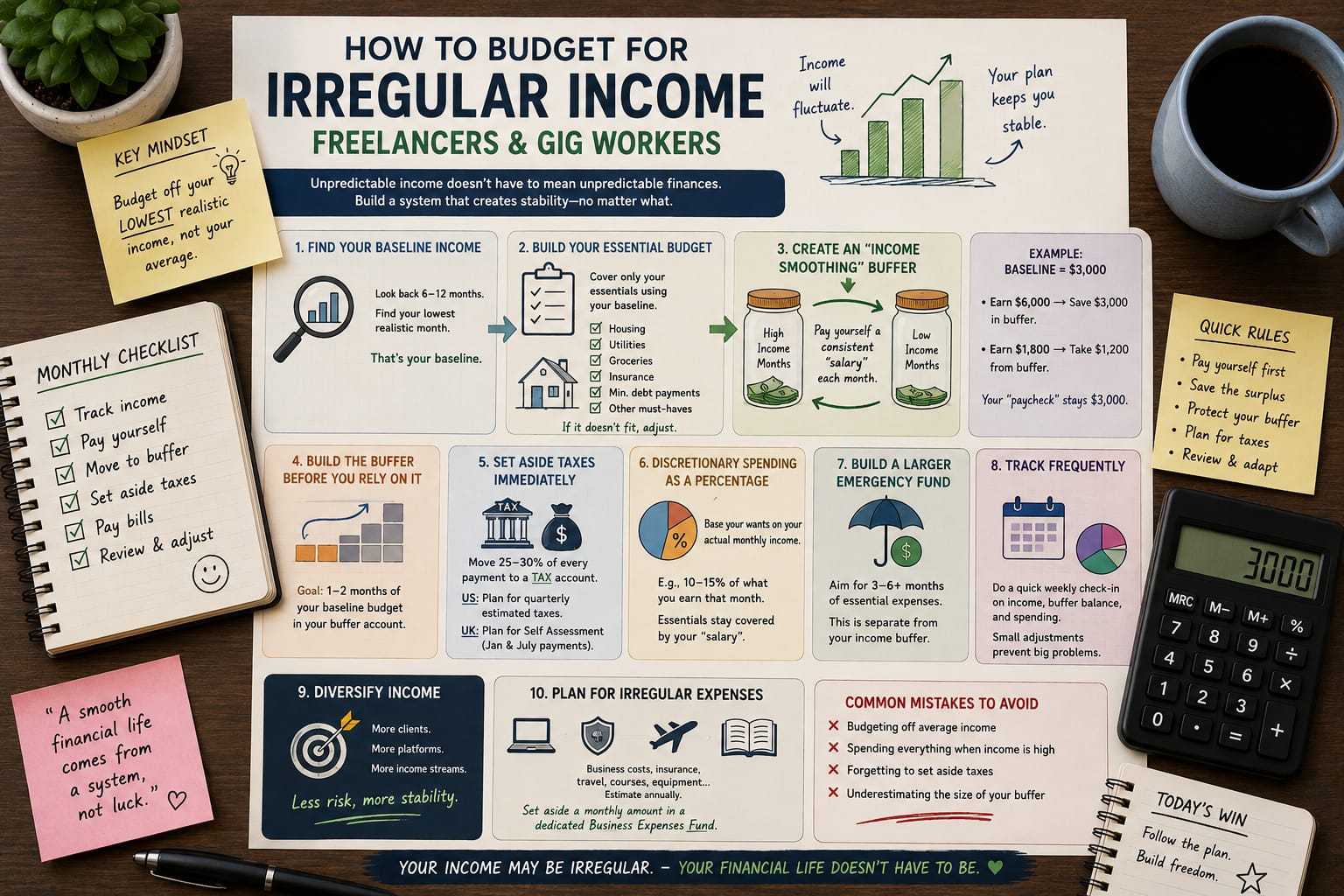
Start with your net income — the money that actually lands in your account after tax and deductions. If your income varies month to month, whether from freelance work, commission, or shift patterns, use the average of your last three to six months as a starting baseline. It is safer to slightly underestimate your income than to overestimate it.
Step 2: Track Where Your Money Actually Goes
Before you decide where your money should go, you need to know where it currently goes. Pull up the last two to three months of bank and card statements and sort every transaction into simple categories: housing, utilities, groceries, transport, debt payments, subscriptions, dining out, and everything else.
Do not judge yourself during this step. The goal is information, not guilt. Most people are surprised by at least one category — usually food delivery, streaming subscriptions, or small daily purchases that quietly add up to a large monthly total.
Step 3: Choose a Budgeting Method That Fits Your Personality
There is no single “correct” budgeting method. The best one is the one you will actually use.
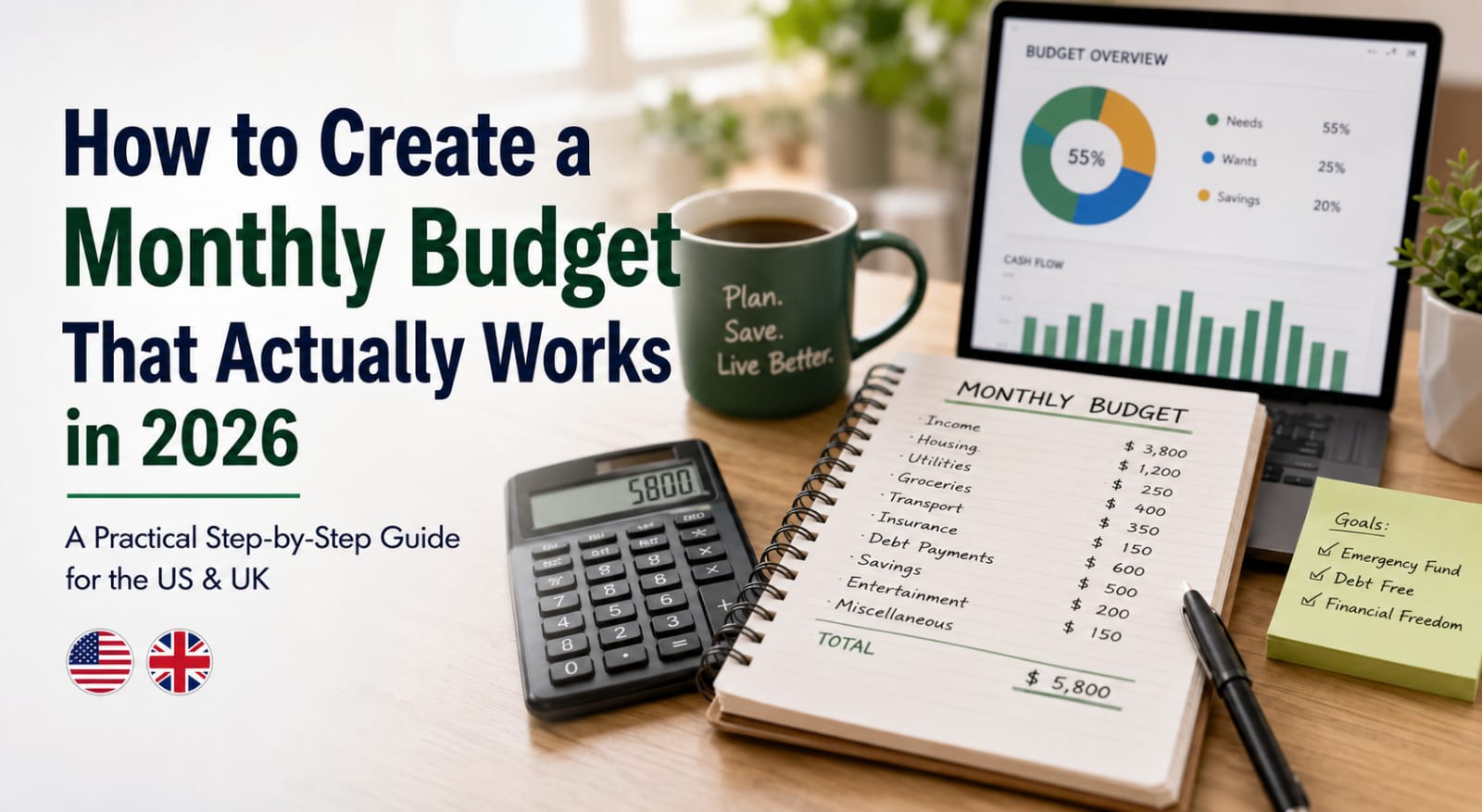
The 50/30/20 approach splits income into needs, wants, and savings or debt repayment. It is simple and works well for people who want structure without micromanaging every pound or dollar.
Zero-based budgeting assigns every unit of income a job, so income minus expenses equals zero. This suits people who like precision and control.
The envelope or category system puts a fixed amount toward each spending category and stops when it runs out. This works well for people who overspend in specific areas, like eating out or shopping.
If you have never budgeted successfully before, start simple. A complicated system you abandon after two weeks is worse than a basic one you keep for a year.
Step 4: Build in Irregular and Annual Expenses
This is the step most budgets skip, and it is often the reason they collapse. Make a list of every expense that does not happen monthly: car maintenance, annual subscriptions, holiday travel, gifts, school expenses, and insurance renewals.
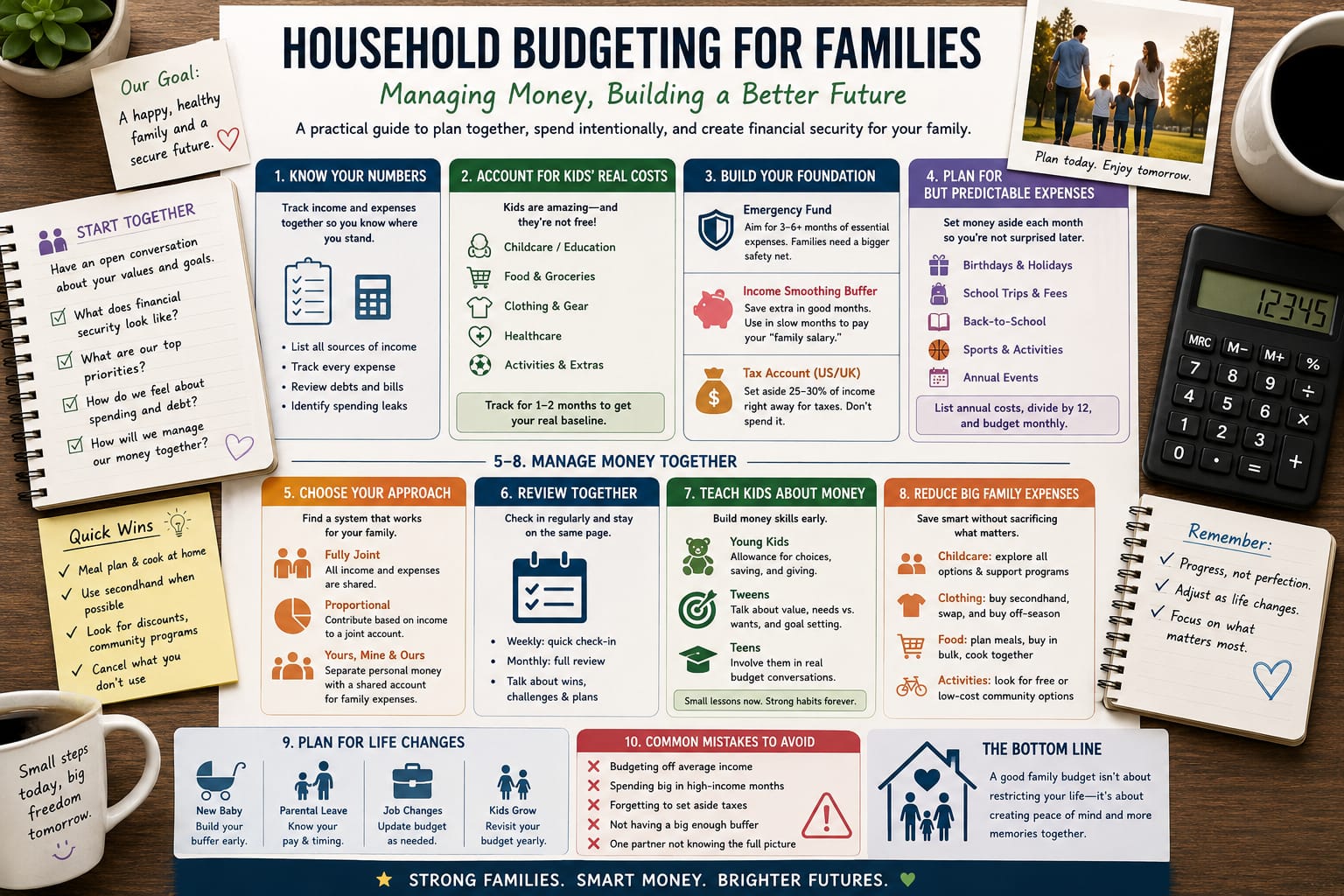
Add up the yearly total, divide it by twelve, and set that amount aside every month in a separate savings pot. When the expense arrives, the money is already there waiting, instead of derailing your entire budget.
Step 5: Set Realistic Category Limits
Using your spending history from Step 2, set limits for each category that are realistic, not aspirational. If you currently spend £400 a month on groceries, do not set a limit of £200 unless you have an actual plan to get there — meal planning, a different shop, batch cooking. Otherwise you are setting yourself up to “fail” a number that was never realistic in the first place.
Leave a small cushion category labeled “miscellaneous” or “buffer.” Life happens, and having ten or twenty extra dollars or pounds with nowhere specific to go prevents small surprises from breaking your whole system.
Step 6: Automate What You Can
Willpower is a limited resource, and relying on it daily is exhausting. Automate as much of your budget as possible:
Set up automatic transfers to savings on payday, before you have a chance to spend the money.
Automate bill payments so nothing is missed and no late fees pile up.
Use a separate account for discretionary spending, so your “fun money” is physically separated from your bills and savings.
Automation removes decision fatigue. You do not have to remember to save; it simply happens.
Step 7: Review Weekly, Not Just Monthly
A monthly budget needs more than a once-a-month glance. Set aside ten to fifteen minutes each week to check in: Are you on track? Did anything unexpected come up? Do any categories need adjusting for the rest of the month?
This short weekly habit catches small problems while they are still small, instead of discovering on the 28th that you have overspent by a large amount with no time left to correct course.
Step 8: Adjust Instead of Abandoning
The biggest shift in mindset that makes budgets actually work long-term is this: a budget is not a contract you either keep perfectly or break entirely. It is a living plan you adjust as life changes.
If you overspend in one category, do not throw out the whole budget. Simply rebalance — pull a little from another category, note what happened, and move forward. Perfectionism is often the real reason budgets get abandoned, not overspending itself.
Common Budgeting Mistakes to Avoid
Forgetting subscriptions. Streaming services, apps, and memberships quietly accumulate. Review them every few months and cancel what you do not use.
Not accounting for lifestyle inflation. As income grows, spending often grows just as fast. A working budget keeps at least some of that extra income going toward savings or debt, not just lifestyle upgrades.
Comparing your budget to someone else’s. A budget that works for a colleague with different debts, dependents, or goals will not necessarily work for you. Build around your own numbers and priorities.
Using too many tools at once. A spreadsheet, an app, and a notebook all fighting for your attention leads to nothing being tracked properly. Pick one system and commit to it.
Sample Monthly Budget Framework
Here is a simplified structure many people find useful as a starting point, based on take-home income:
Housing (rent/mortgage, utilities): 30–35%
Groceries and household essentials: 10–15%
Transport: 10–15%
Debt repayment: 10–20% (higher if actively paying down debt)
Savings and investments: 10–20%
Discretionary spending (dining out, entertainment, hobbies): 10–15%
Irregular expenses fund: 5%
These percentages are a guide, not a rule. Someone with significant debt might allocate far more toward repayment temporarily, while someone with no debt might push more toward savings and investing.
Tools That Can Help
Whether you prefer a simple spreadsheet, a notebook, or a budgeting app, the tool matters far less than the consistency behind it. Many people in the US and UK use apps that link directly to their bank accounts for automatic categorization, while others prefer the tactile control of a manual spreadsheet. Choose based on how much hands-on control you want, not based on what looks impressive.
Making the Budget Stick Long-Term
A budget that works is one you barely have to think about after the first few months, because the habits and automation are doing the work quietly in the background. The goal is not to obsess over every transaction forever. It is to build a system solid enough that your money moves in the right direction without constant supervision.
Give any new budget at least two to three full months before judging whether it works. The first month is almost always messy, since old habits and forgotten expenses tend to surface. By month three, most people find their real rhythm.
Final Thoughts
A monthly budget that actually works is built on honesty, not perfection. It reflects your real income, your real spending patterns, and your real goals, with enough flexibility to bend without breaking. Start with your true numbers, choose a method that suits your personality, plan for the expenses that do not happen every month, and review your progress often enough to catch problems early.
Budgeting is not about restriction for its own sake. It is about making sure your money is doing what you actually want it to do — and giving yourself the clarity and confidence that comes from knowing exactly where you stand, every single month.
Frequently Asked Questions
How much should I budget for savings each month? A common starting target is 20% of take-home income, split between an emergency fund and longer-term savings or investments. If that is not realistic yet, start with 5–10% and increase it as your income grows or debts shrink.
What is the easiest budgeting method for beginners? The 50/30/20 method is generally the easiest starting point because it uses broad categories rather than detailed line items, making it simple to follow without feeling overwhelming.
Should I budget for irregular income? Yes. If your income varies, budget based on your lowest expected monthly income and treat anything above that as a bonus to put toward savings, debt, or irregular expenses.
How often should I revise my budget? Review it weekly for quick check-ins and do a full revision monthly, especially after any change in income, rent, or major expenses.
How to Create a Monthly Budget That Actually Works in 2026


Leave a Reply